
History of Blues
Bessie Smith, Robert Leroy Johnson, Charlie Patton, John Lee Hooker and Willie Dixon – they are the heroes of blues history, just to name a few. But before these early stars, there were many small musicians who laid the foundation for the blues in Mississippi in the mid-19th century.
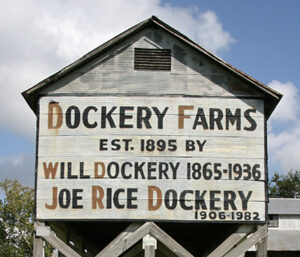
Many blacks were forced to work as slaves in the cotton fields of the big landowners in the southern United States. They sang songs in the field (fieldhollers) to better endure the monotonous and hard work. The rhythm was set by the work, the sequence of always the same movements. The cotton pickers sang about love, suffering and longing.
Songs reminded her of her homeland on the other side of the Atlantic. The style of music owes its name to the wistful mood: anyone who feels „blue“ is sad or melancholic.
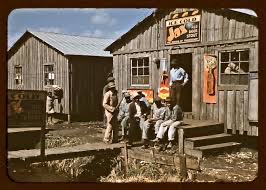
Music meant a lot to the field workers. They allowed them to feel free even in captivity. She gave them a cultural identity. Although the white people in the USA despised this music (devil music), the simple melodies prevailed.
The blues revolutionized the music world and continues to influence rock and pop music to this day.
Washboard, cigar box and harmonica
The American Civil War ended in 1865 – and with it officially slavery in all US states. Afro-Americans gradually began to emancipate themselves. A black music scene emerged. But the former slaves and their descendants were by no means equal.

Improvement of everyday life
From now on, however, they should be able to develop more freely than before – at least a little. That was an improvement given the previous exploitation and oppression. Before 1865 they had toiled in vain as serfs, now they were to receive wages for their labour.
instruments
Those who could afford it bought a musical instrument with their savings. Although you have to know that back then $20 was a fortune and $35-$50 was prohibitive for a Dobro guitar. Those who were clever enough built themselves a guitar from the garbage of the wealthy, the resonance body of which consisted of cigar boxes, for example. Disused washboards were converted into rhythm instruments. Harmonicas from Germany were also affordable – and therefore very popular.
How the blues evolved
The musicians developed the simple workers‘ songs further and knitted popular songs out of them. So many bands formed. Wooden barns and barns, so-called juke joints, served as concert halls. This original blues music enjoyed growing popularity. The popular blues influenced and fertilized many other styles of music. He became a pioneer for jazz, soul, funk and rock’n’roll. It mingled with the folk music that came to the United States with immigrants from around the world. And he founded a new genre of music, Rhythm ’n‘ Blues (R’n’B, pronounced „Ar-n-Bi“).

The R’n’B sound inspired many white musicians, not only in the USA. In the 1960s, a large R’n’B scene developed in Great Britain. The R’n’B musicians here wanted to set themselves apart from the commercial beat sound. They choose the blues veterans from the States as their role models and idols.
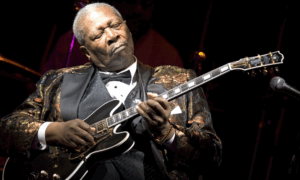
Musicians of our days
Musicians like Eric Clapton, Jeff Beck, Alvin Lee and bands like the Yardbirds, Ten Years After, Cream and last but not least the Reling Stones were representatives of this R’n’B community in Great Britain. Her music was well received in the home of the blues. The rest is music history.